

What is Real Ear Measurement and Why It Matters for Your Hearing Aids
Real Ear Measurement verifies that hearing aids deliver precisely the right sound for each patient's unique ear canal rather than relying on the software's generalized first fit.
You picked up your new hearing aids, they were programmed, and they still don't sound quite right. Maybe voices sound tinny. Maybe your own voice sounds too loud in your head. Maybe things just feel off in a way you can't put into words. That's more common than most people realize, and it usually comes down to one missing step: verification.
What Real Ear Measurement Is
Real Ear Measurement, sometimes called live speech mapping, is a way of confirming that your hearing aids are actually delivering the sound your ears need, not just the sound the manufacturer's software assumes you need. It's the difference between guessing and measuring.
Every hearing aid comes out of the box with a "first fit," a starting program based on your audiogram. That's a reasonable starting point. It is not a finished product. Software doesn't know the exact shape of your ear canal, how your particular device sits in it, or how sound behaves once it's actually inside your ear. Real Ear Measurement closes that gap.
What Happens During Your Appointment
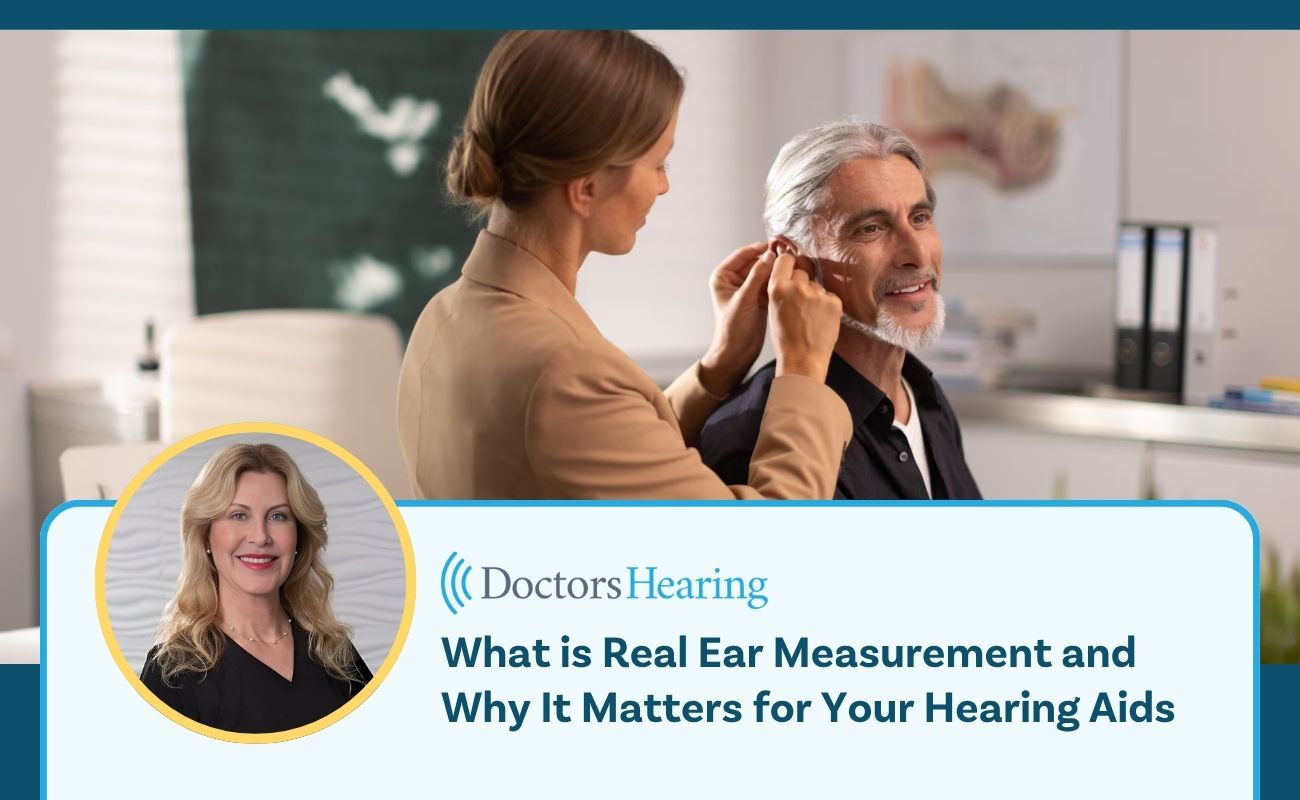
Here's what the process looks like in the room. We place a small, soft probe microphone right next to your eardrum, alongside your hearing aid. This tiny microphone measures the actual sound pressure reaching your eardrum in real time, while you're wearing your device the way you normally would.
We then play a calibrated speech signal (not a beep or a tone, but actual speech-like sound) at different volumes, soft, average, and loud. The probe mic captures exactly what your ear is receiving at each pitch and volume. We compare that live measurement against a prescriptive target, a research-based formula calculated specifically for your hearing loss.
If the measured curve and the target curve don't line up, we know exactly where the mismatch is and adjust from there. Too much bass in the low frequencies? We can see it. Not enough gain for a whispered voice? We can see that too. Nothing is left to assumption.
Why the Software's First Fit Isn't the Finish Line
A first fit is a prediction. It's built from average ear canal measurements and average outcomes, and you are not an average. Ear canal size, residual ear canal volume, how deep your particular device sits, even the shape of your ear, all of it changes how sound actually reaches your eardrum.
Without verification, a provider is essentially trusting that the software got it right for you specifically. Sometimes it does. Often it's close but not close enough, especially for soft speech sounds like "s," "f," and "th," which happen to be the sounds most people struggle to hear.
This is also where a lot of first-time hearing aid users get discouraged. They were told the devices would help, they don't feel like they're helping enough, and they assume the hearing aids themselves are the problem. Usually the hearing aids are fine. They just were never verified against a real target for that specific ear.
Real Ear Measurement is considered the gold standard in the audiology field for exactly this reason. And yet only a minority of hearing aid providers in our area actually perform it. It takes more time, more training, and the right equipment, so a lot of practices skip it and rely on the first fit alone.
Questions to Ask Any Provider Before You Buy
Before committing to hearing aids anywhere, it's worth asking a few direct questions:
- Do you perform Real Ear Measurement or live speech mapping as part of your fitting process?
- Will I see the actual measurement results, not just the software's predicted output?
- How many fitting appointments are typically included, and what happens if adjustments are needed?
- Is there a follow-up plan for fine-tuning once I've worn the devices in real-world situations?
If a provider can't answer the first question with a clear yes, that's worth knowing before you spend money on devices that may never be properly verified.
Get a Verified Hearing Aid Fitting in Bradenton
At Doctors Hearing, Real Ear Measurement is part of how we fit every patient, not an upgrade or an extra step tacked on for an additional fee. Dr. Jill Diesman and our team believe a hearing aid is only as good as its fit, and we don't consider a fitting finished until we've confirmed, with real measurements, that your devices are doing what they're supposed to do for your ears specifically.
If you're a new hearing aid user, or if your current devices have never quite lived up to expectations, we'd like to help. Learn more about our hearing aid fitting process or give us a call at (941) 795-2811 to schedule an appointment.


John Castello


